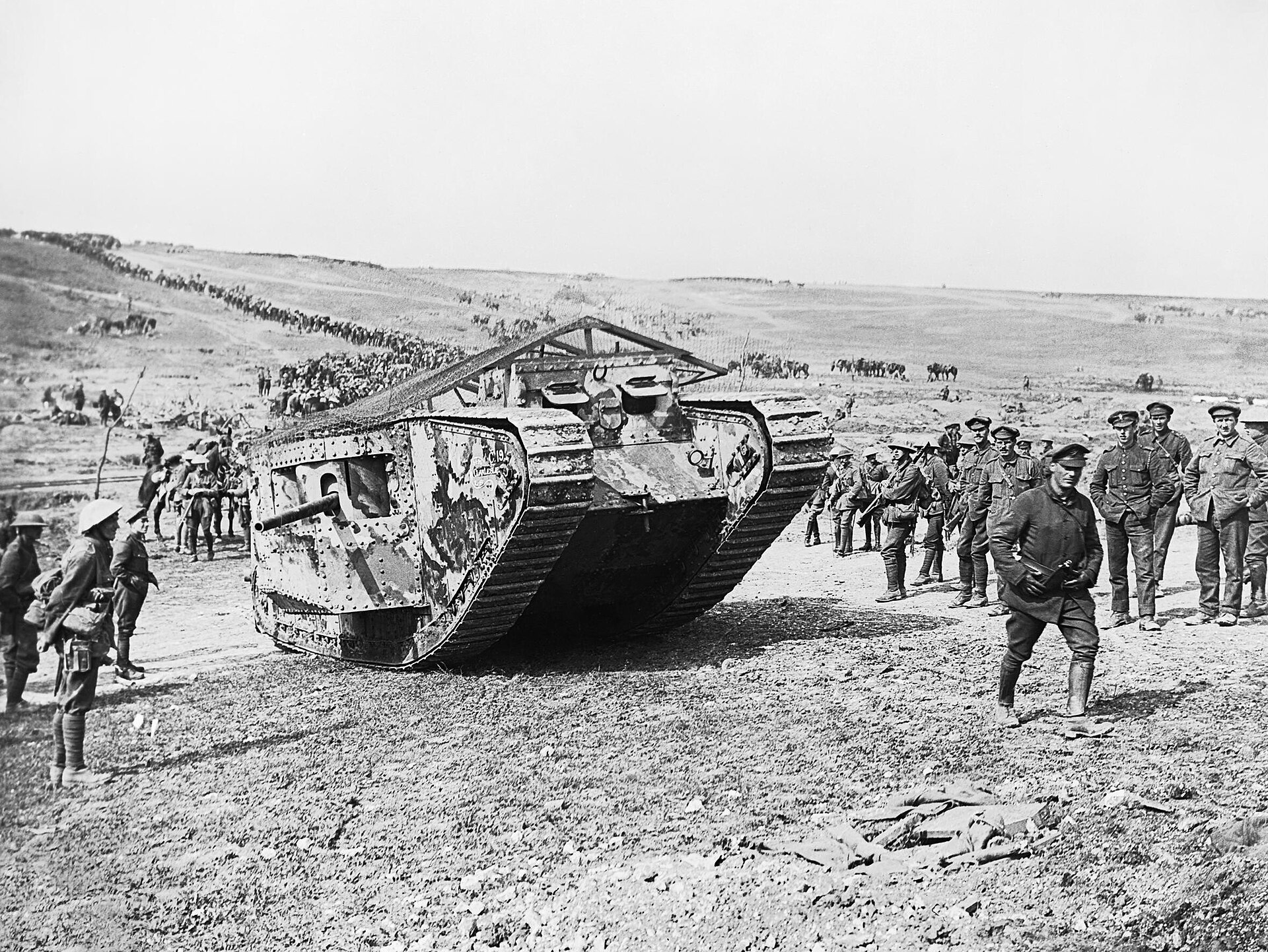
The Mark I tank had no turret. Its tracks ran around a tall rhomboid hull, while weapons projected from side sponsons. The design prioritized crossing shell-torn ground and trenches rather than speed or comfort.
Crews worked beside an unsilenced engine and transmission in intense heat, fumes, and noise. Steering required coordination and, in early practice, considerable physical effort.
Male, female, and compromise
“Male” tanks carried naval-style six-pounder guns with machine guns; “female” tanks emphasized machine guns. The distinction reflected uncertainty about the targets tanks would meet and how they should support one another.
Armor offered protection against small-arms fire and fragments, but the machines were vulnerable to artillery, mechanical failure, and terrain.
A prototype in public
Flers-Courcelette exposed both the design’s promise and its weaknesses. A vehicle could cross obstacles that stopped wheeled transport, yet reliability determined whether it reached the fight at all.
Later marks revised steering, armor, and internal arrangements. The Mark I remained important because it turned a guarded experiment into a visible battlefield fact.
Sources
- The Tank Museum, The First Tanks
- The Tank Museum, Tanks at Flers
- National Army Museum, first use of tanks
Last reviewed September 15, 2026. Report a correction.