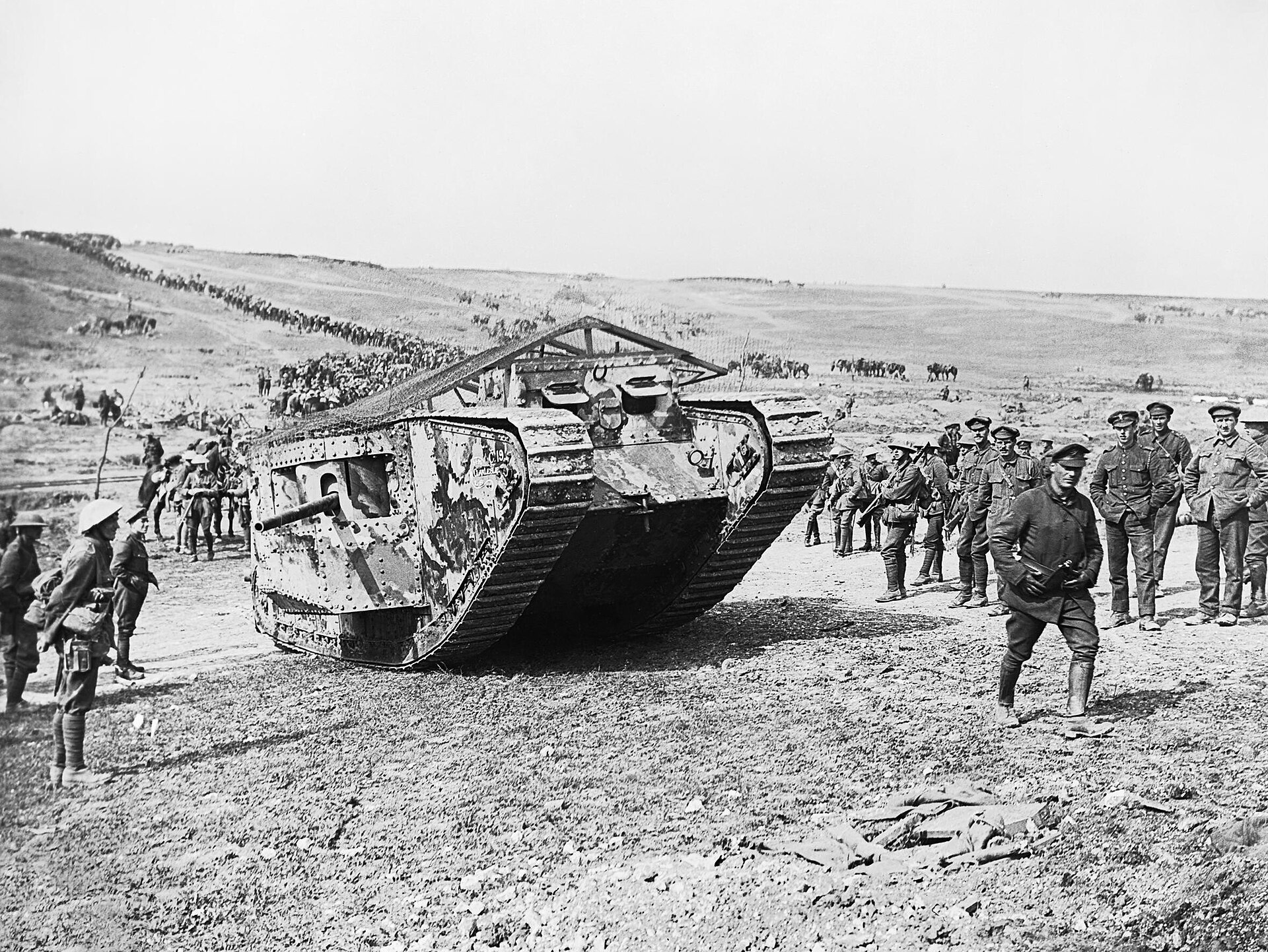
The Battle of the Somme began on July 1, 1916, after a long Allied bombardment. British and French armies attacked a deeply prepared German defensive system across a broad front.
The first day brought catastrophic British losses, but the campaign continued into November. It became a struggle measured in limited advances, repeated assaults, and the ability to replace men and matériel.
A battle larger than one day
Popular memory often fixes on July 1. The wider offensive included many separate actions, tactical adaptations, and intense French fighting south of the river.
Artillery methods changed, aircraft observed and contested the battlefield, and small-unit tactics evolved under pressure. Flers-Courcelette was one attempt to turn those lessons into movement.
What attrition meant
The Somme imposed enormous casualties on every participating army. Historians continue to debate its strategy, but the campaign undeniably consumed experienced soldiers and industrial resources.
The tank’s debut belongs inside that larger reality: not a machine suddenly replacing infantry, but an experimental tool introduced into a battle already defined by combined firepower.
Sources
- The Tank Museum, The First Tanks
- The Tank Museum, Tanks at Flers
- National Army Museum, first use of tanks
Last reviewed September 15, 2026. Report a correction.