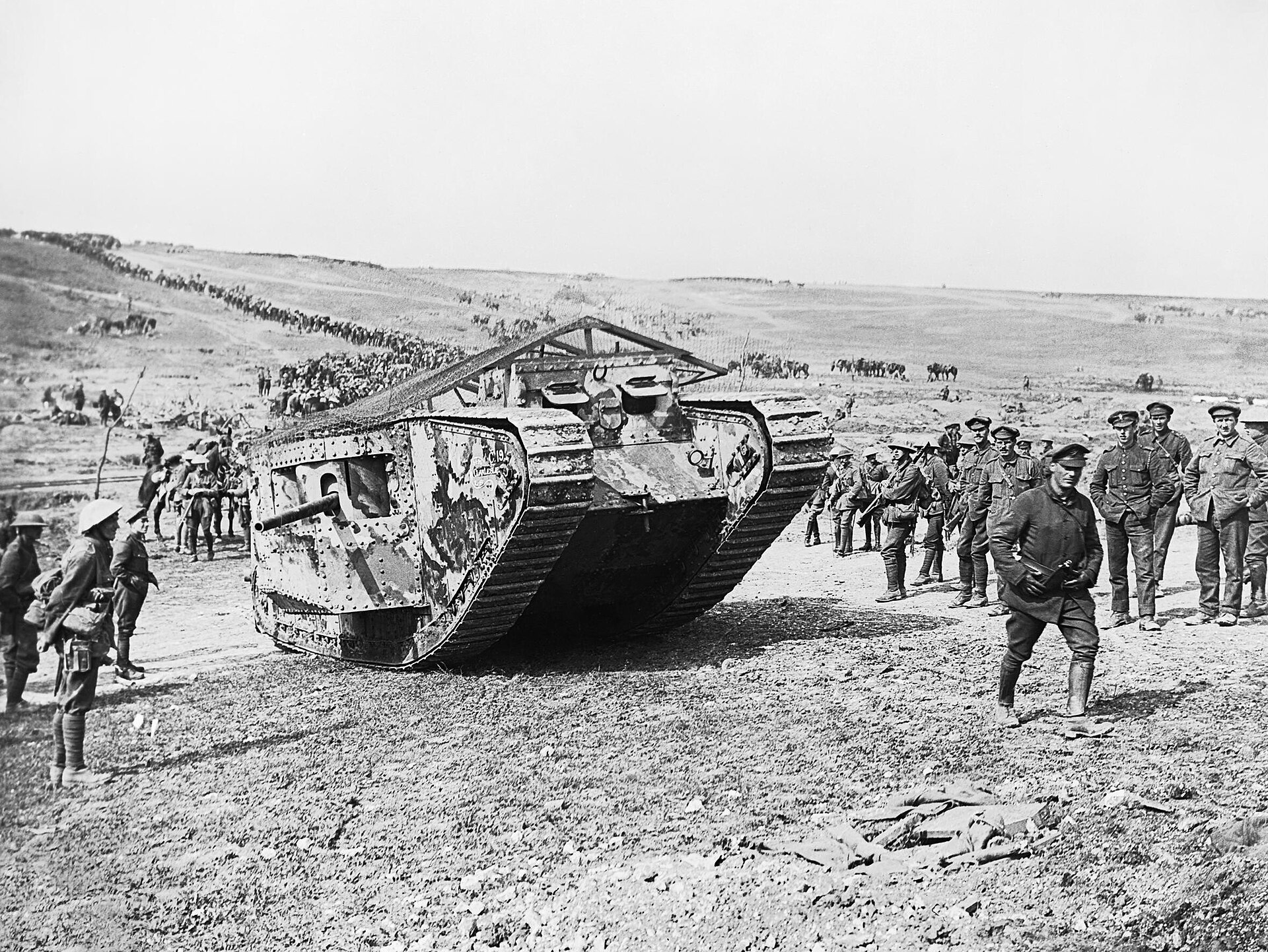
Little Willie was an experimental armored vehicle built in 1915 during Britain’s secret search for a machine able to cross trenches and wire. Its name disguised work that officials discussed under terms such as “landship” and eventually “tank.”
The prototype helped engineers test tracks, transmissions, weight, and steering under real mechanical loads.
Learning through failure
Little Willie’s low track arrangement struggled with the width and shape of major trenches. That weakness encouraged a new design whose tracks rose around a rhomboid body.
Prototype work made failure useful. A machine that was not fit for battle could still reveal which geometry, controls, and components needed to change.
From workshop to battlefield
The development team moved rapidly from experiments to the machine later called Mother and then to production Mark I tanks.
The speed of that transition helps explain the failures at Flers. The concept had advanced quickly, but manufacturing consistency, crew experience, recovery systems, and battlefield doctrine needed more time.
Sources
- The Tank Museum, The First Tanks
- The Tank Museum, Tanks at Flers
- National Army Museum, first use of tanks
Last reviewed September 15, 2026. Report a correction.