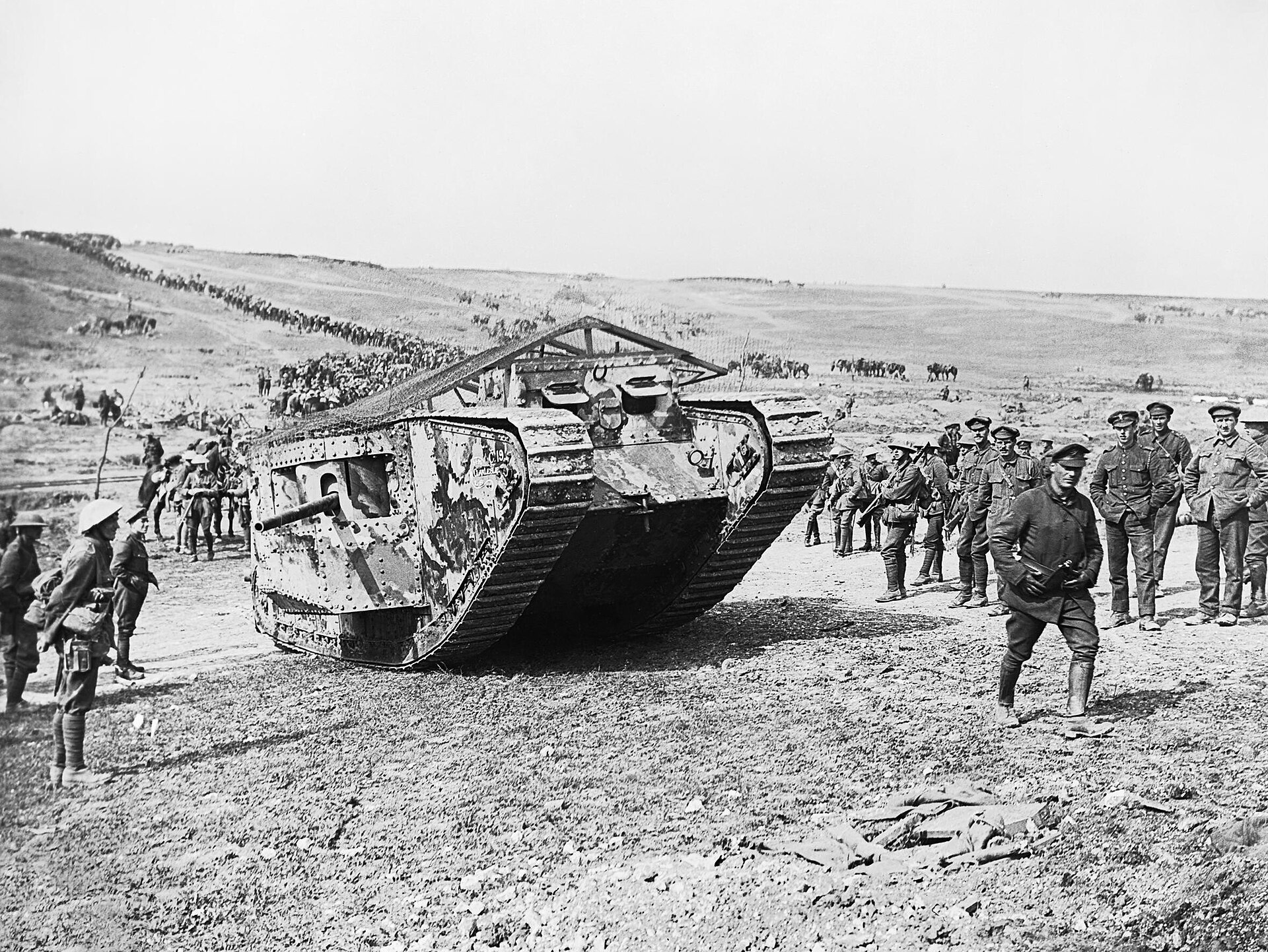
The British attack at Cambrai in November 1917 assembled tanks on a scale far beyond their first use. Improved artillery methods helped preserve surprise, while specially prepared machines carried fascines to fill trenches.
Initial gains demonstrated that a coordinated assault could penetrate formidable defenses without a prolonged preliminary bombardment.
The breakthrough problem
Breaking the front was not the same as exploiting beyond it. Mechanical losses accumulated, infantry tired, routes clogged, and reserves were insufficient to convert the opening into a decisive result.
German counterattacks recovered much of the lost ground using flexible infantry tactics and concentrated fire.
A lesson larger than victory
Cambrai was neither a simple tank triumph nor proof of failure. It showed how armor could amplify surprise and coordination, and how quickly success could fade without logistics and reserves.
The path from Flers to Cambrai was a path from novelty toward doctrine. Armies were learning to treat tanks as part of an interdependent battlefield system.
Sources
- The Tank Museum, The First Tanks
- The Tank Museum, Tanks at Flers
- National Army Museum, first use of tanks
Last reviewed September 15, 2026. Report a correction.