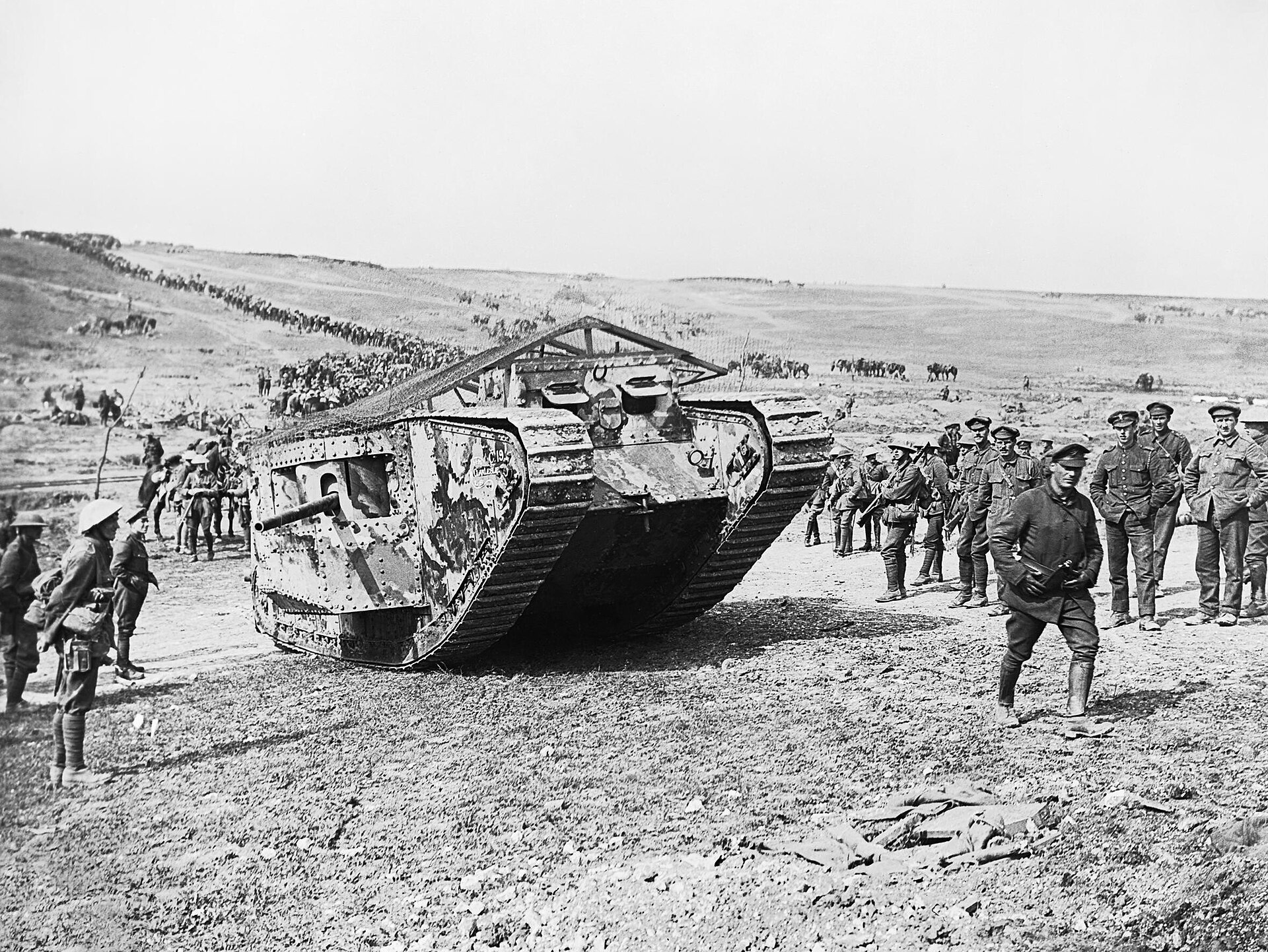
By late 1914, opposing armies on the Western Front had dug continuous systems of field fortifications. Firepower made movement across exposed ground extraordinarily costly.
A trench line was rarely a single ditch. It included front, support, and reserve positions connected by communication trenches, reinforced by dugouts, machine-gun posts, barbed wire, and artillery.
Why bombardment was not enough
Artillery could cut wire and destroy positions, but it also warned defenders, churned ground into obstacles, and often failed to eliminate deep shelters. Attackers then had to cross broken terrain while defenders emerged.
Once an assault gained ground, supplying and reinforcing it could be harder than the initial advance. Communications lagged, guns had to move, and counterattacks arrived.
A machine for a system
Tanks promised protected firepower and obstacle crossing, but they could not solve every part of the problem alone. Infantry, artillery, engineers, aircraft, logistics, and communications still had to work together.
Their early history is therefore a story of integration. The armored vehicle mattered most when it became one component of a larger method.
Sources
- The Tank Museum, The First Tanks
- The Tank Museum, Tanks at Flers
- National Army Museum, first use of tanks
Last reviewed September 15, 2026. Report a correction.