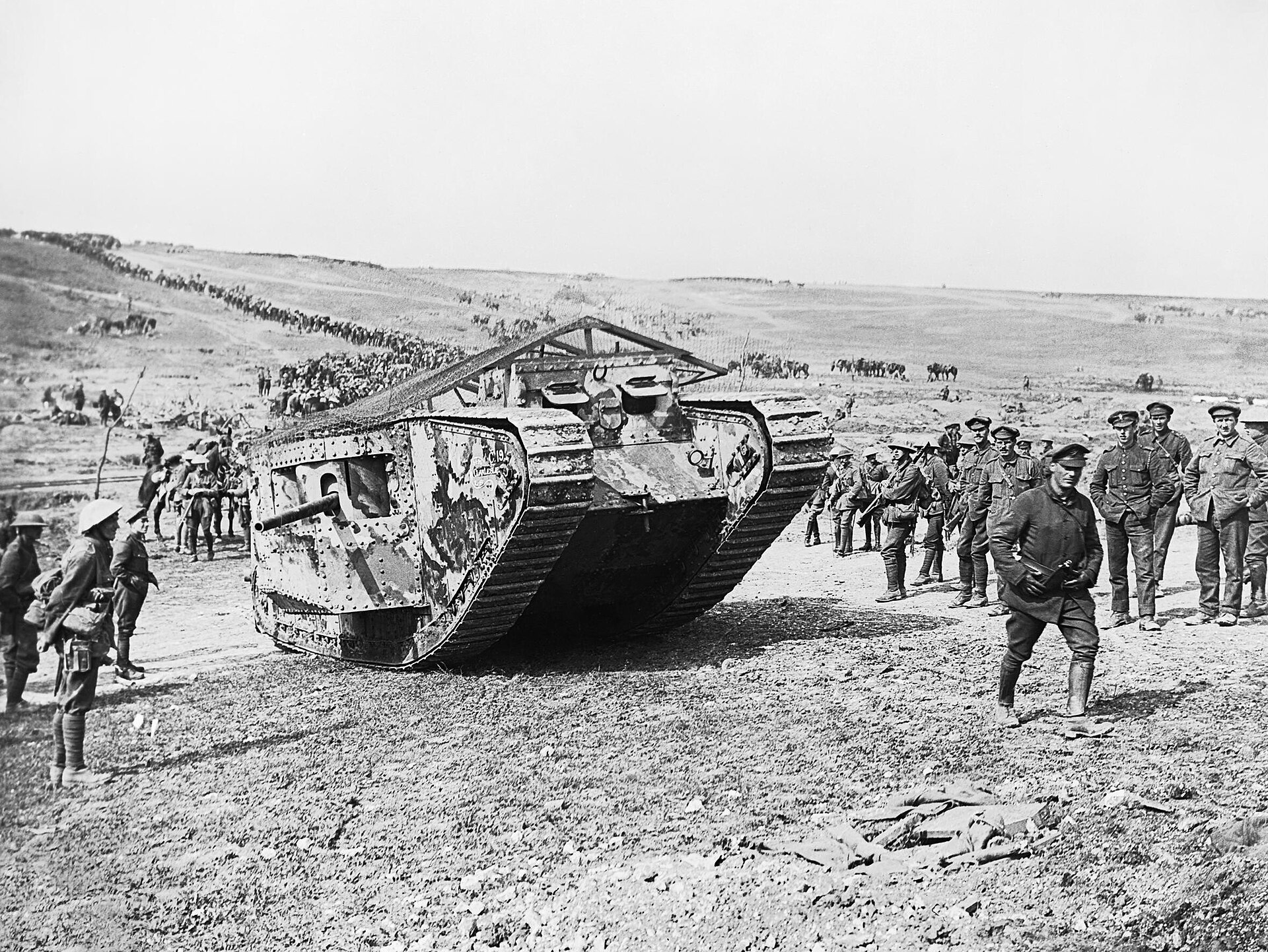
The British Army committed tanks to combat for the first time during the Battle of Flers-Courcelette on September 15, 1916. Forty-nine machines were assigned, but mechanical failures and difficult ground meant far fewer reached action.
Those that moved forward were slow, hot, noisy, and hard to steer. They were also unlike anything soldiers had previously met: armored hulls able to cross some trenches, crush wire, and carry weapons through machine-gun fire.
A secret revealed early
The tank had been developed to help infantry break the trench deadlock. Commanders knew the machines were immature, yet the pressure of the Somme offensive encouraged their use before larger numbers and better training were available.
Results were uneven. Some tanks supported advances and caused alarm; others became stuck, lost tracks, or stopped with engine and transmission problems.
From experiment to arm
The debut did not create an instant breakthrough. It did prove that armored tracked vehicles could have a battlefield role, prompting both refinement and countermeasures.
By Cambrai in 1917 tanks would be used in greater concentration and with more deliberate planning. The first morning at Flers remained the awkward beginning of a military system still being invented.
Sources
- The Tank Museum, The First Tanks
- The Tank Museum, Tanks at Flers
- National Army Museum, first use of tanks
Last reviewed September 15, 2026. Report a correction.