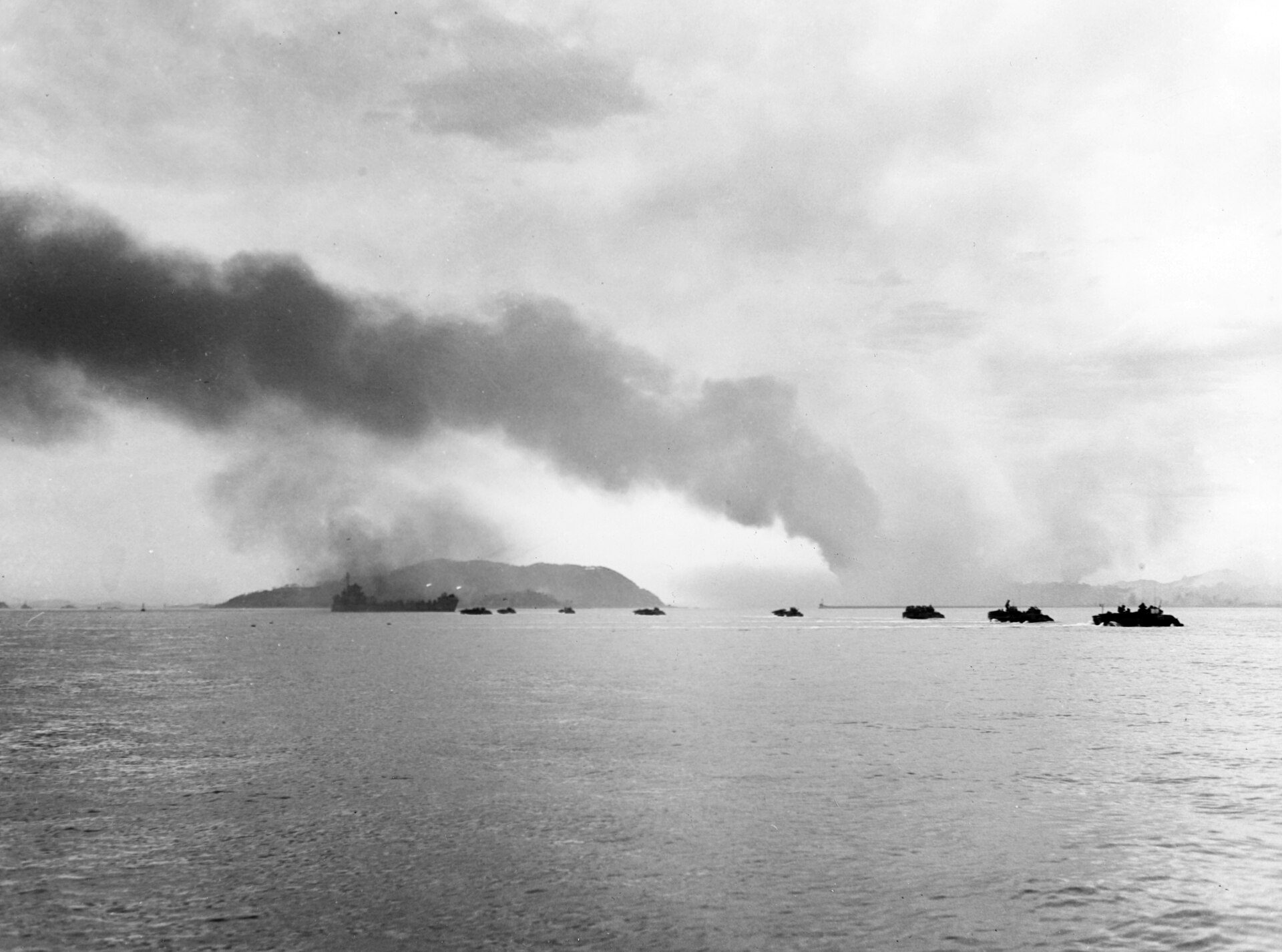
By August 1950, North Korean advances had compressed defenders into an area around the port of Pusan, now Busan. The perimeter used the Nakdong River and difficult terrain as part of its defensive line.
The port kept reinforcements, vehicles, ammunition, and supplies flowing into the enclave. That logistical access was one of the defense’s decisive advantages.
Pressure around the ring
North Korean forces attacked at multiple points, seeking to break through before allied strength accumulated. Units moved between threatened sectors and fought repeated battles for ridges and river crossings.
The perimeter was not a static wall. It was a contested network held by South Korean, American, British, and other forces under severe pressure.
The other half of Inchon
The amphibious landing is often told as a self-contained surprise, but it depended on the defenders at Pusan preventing collapse.
When the breakout began, North Korean forces faced pressure from the southeast and a new threat to their rear. The two operations became strategically meaningful together.
Sources
- U.S. Army, The Korean War
- U.S. Army Center of Military History, Korean War campaigns
- U.S. Army Corps of Engineers, planning the Inchon invasion
Last reviewed September 15, 2026. Report a correction.