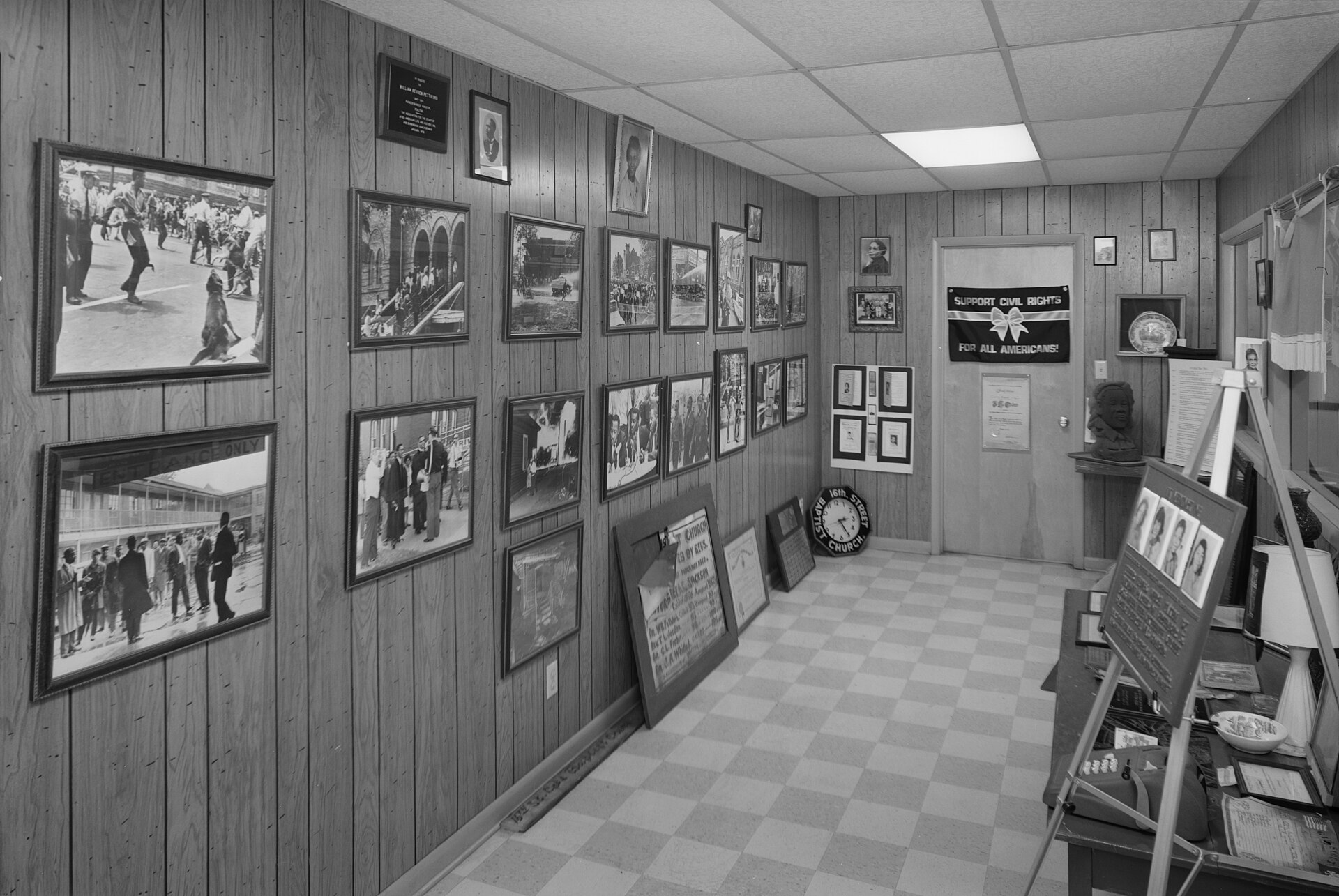
Birmingham’s 16th Street Baptist Church was organized in the nineteenth century, and its present building opened in 1911. Located near the city center, it became one of the most prominent Black churches in Alabama.
Churches supplied the civil rights movement with meeting rooms, trusted networks, moral language, leadership, and places large enough to gather.
A platform for Project C
During the 1963 Birmingham Campaign, mass meetings at the church prepared demonstrators for boycotts, marches, and arrest. Young participants departed from the area during the Children’s Crusade.
That public role made the building a target for people determined to preserve segregation through fear and violence.
A place that continued
The September bombing damaged the building but did not end the congregation. The church reopened after repairs and continued its religious and civic work.
Today it is a National Historic Landmark within the Birmingham Civil Rights National Monument landscape. Its meaning includes mourning, organizing, worship, survival, and continuing education.
Sources
- National Park Service, 16th Street Baptist Church Bombing
- Federal Bureau of Investigation, Baptist Street Church Bombing
- Library of Congress, Civil Rights Era Timeline
Last reviewed September 15, 2026. Report a correction.