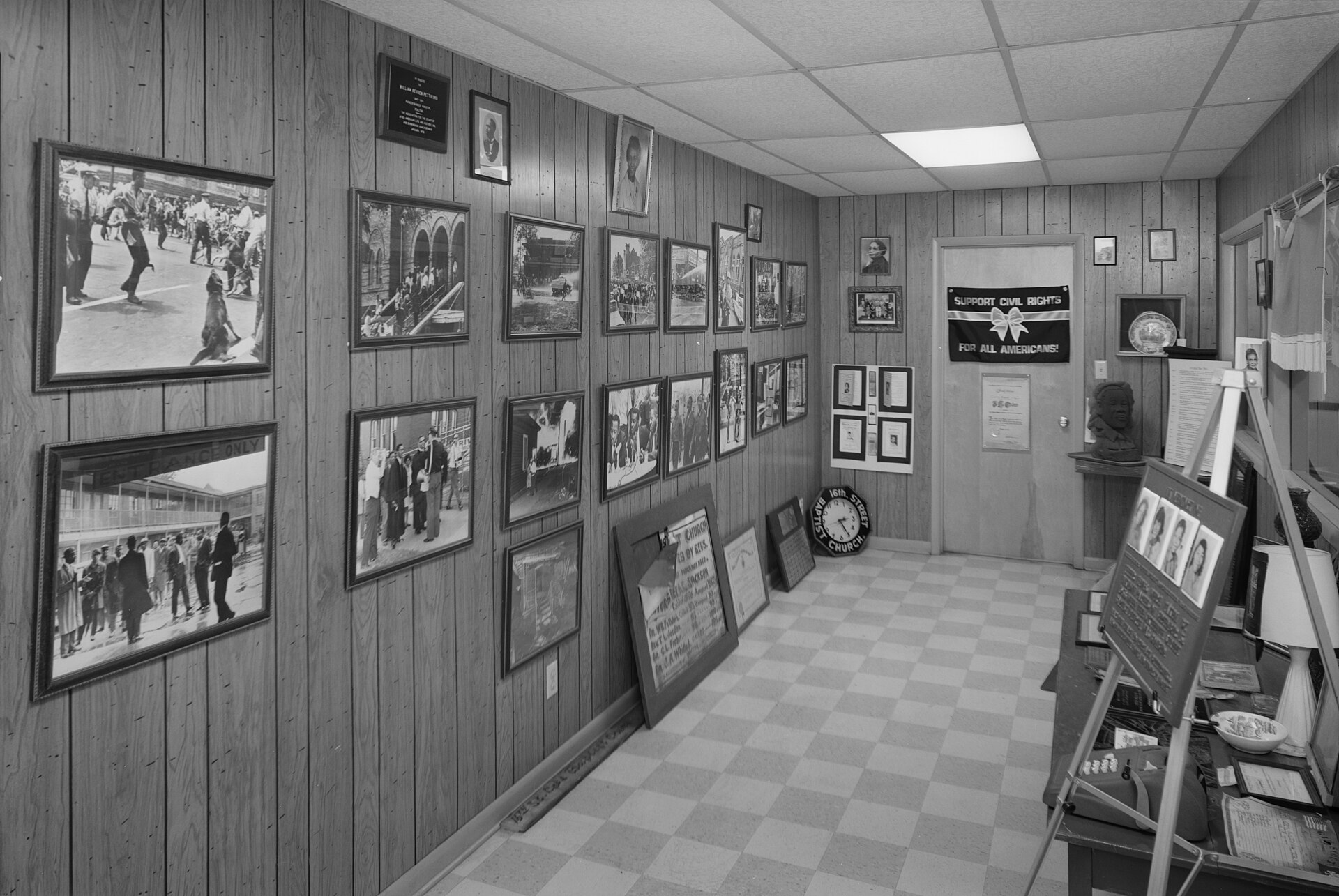
The Birmingham Campaign began in spring 1963 as a coordinated challenge to segregation in one of the nation’s most resistant cities. Local organizing led by Fred Shuttlesworth joined strategy and resources from the Southern Christian Leadership Conference.
Project C—the “C” stood for confrontation—used economic pressure and nonviolent direct action to force negotiation.
Jail and the children’s marches
Martin Luther King Jr. was arrested and wrote his Letter from Birmingham Jail in response to clergy who criticized the campaign’s timing and methods.
When young people joined demonstrations in May, police used dogs and high-pressure fire hoses. Photographs and television coverage spread the violence far beyond Birmingham.
A negotiated step, then terror
Business leaders agreed to elements of desegregation, but white supremacist attacks followed. The A.G. Gaston Motel was bombed in May, and the 16th Street Baptist Church was bombed in September.
The campaign achieved changes while exposing how organized terror could answer peaceful demands. Its history does not move neatly from protest to progress; advance and retaliation occurred together.
Sources
- National Park Service, 16th Street Baptist Church Bombing
- Federal Bureau of Investigation, Baptist Street Church Bombing
- Library of Congress, Civil Rights Era Timeline
Last reviewed September 15, 2026. Report a correction.