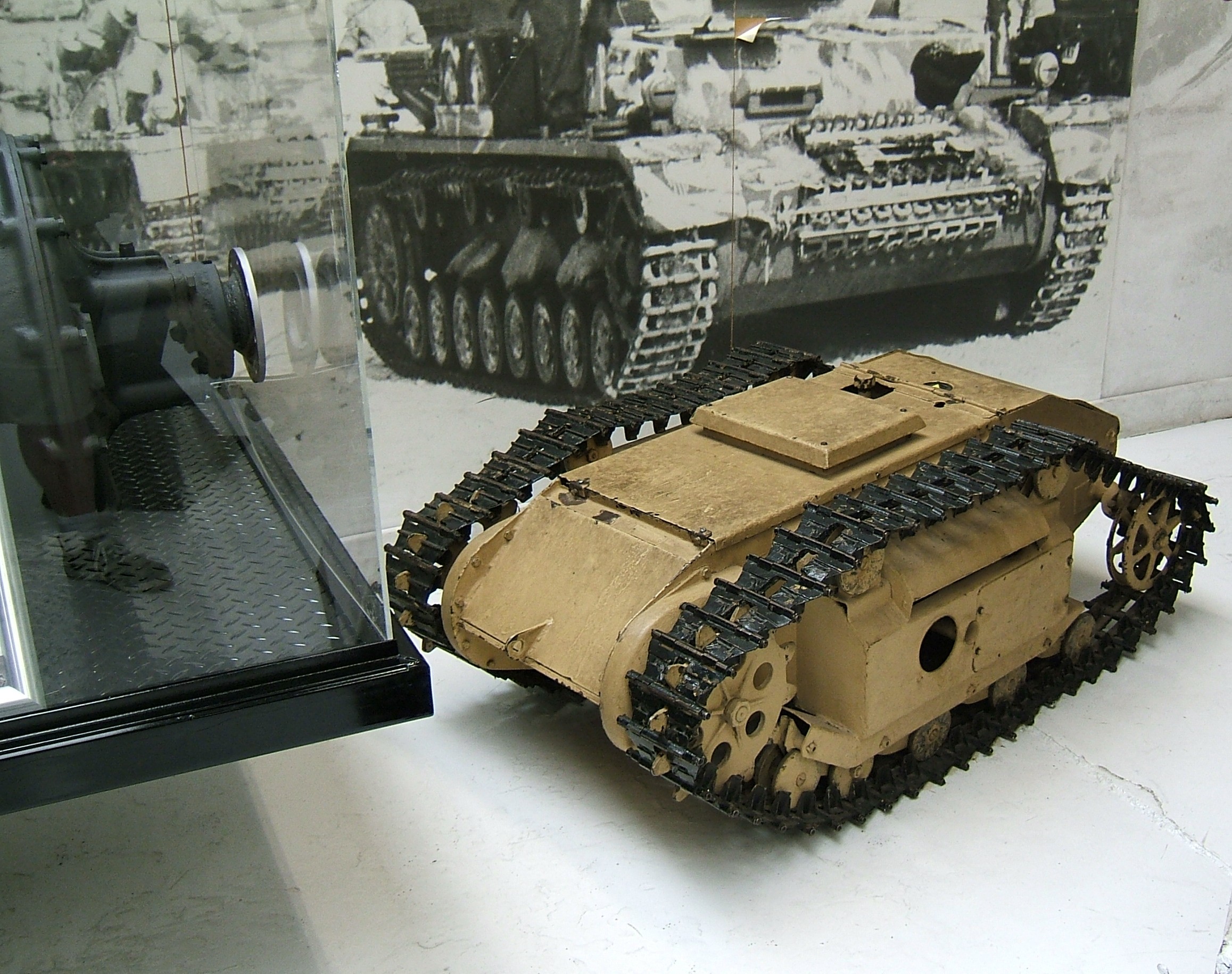
Part of Iguanaverse’s World War II archive.
The Goliath was a low, tracked box intended to carry an explosive charge toward bunkers, tanks, bridges, and minefields while its operator remained behind cover.
Commands traveled through a long three-strand cable unwinding from the rear. The operator steered the vehicle with a control unit, then detonated the charge at the target. Early versions used electric motors; later models adopted gasoline engines to reduce cost.
A disposable machine
Unlike a tank, the Goliath was not designed to return. Its hull, tracks, drive system, and payload were consumed in the explosion. Thousands were built, making it one of the earliest remotely controlled ground weapons produced in quantity.
Control came with a weakness
The cable gave the operator a direct connection that could not be jammed like radio, but it could be severed by shellfire, debris, or a defender. The vehicle was slow, had limited ground clearance, and was vulnerable to small-arms fire.
More symbol than solution
Goliaths appeared on several fronts, including Normandy and Warsaw. Their practical results were uneven, yet captured examples fascinated Allied troops and intelligence officers.
The machine’s historical importance lies less in battlefield success than in the problem it tried to solve: how to send destructive force into a dangerous space without sending a person with it.
Sources
Last reviewed September 14, 2026. Report a correction.