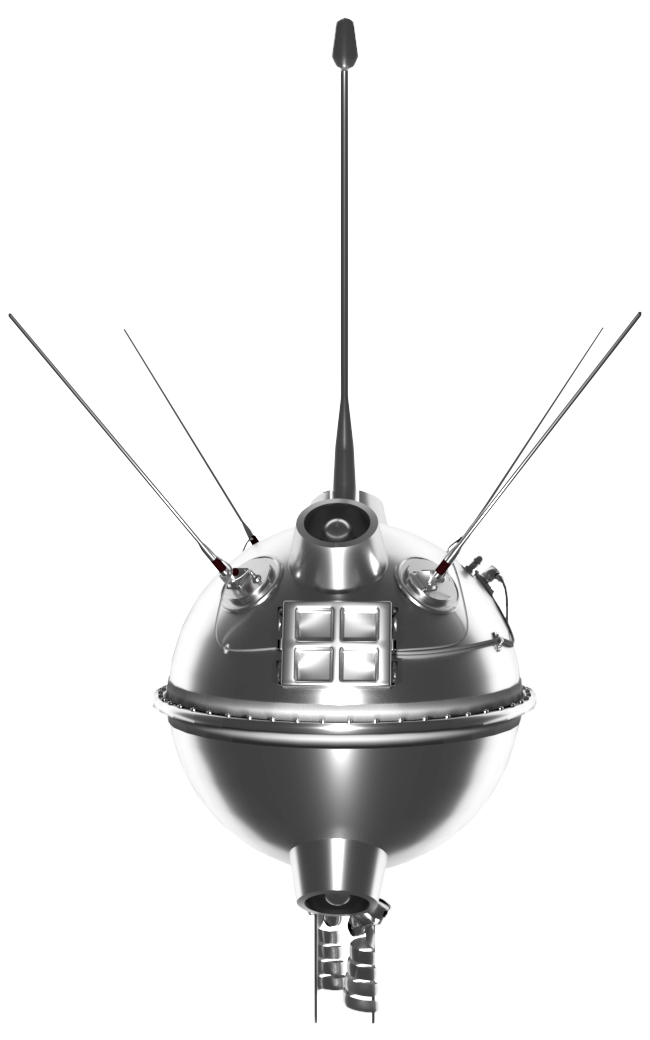
On September 12, 1959, the Soviet Union launched a spherical probe on a direct course for the Moon. Roughly a day and a half later, its radio signal stopped at the moment of impact.
Luna 2—then called the Second Soviet Cosmic Rocket—became the first spacecraft to reach the Moon and the first human-made object known to make contact with another celestial body.
A simple mission with difficult physics
The probe carried instruments to measure radiation, magnetic fields, charged particles, and micrometeorites. It also released a cloud of sodium vapor that could be photographed from Earth, helping observers follow its path through space.
An impact, not a landing
Luna 2 had no system for a gentle descent. It struck near the Mare Imbrium region at high speed, carrying metallic spheres covered with Soviet emblems. The final radio transmission gave controllers evidence that the planned collision had occurred.
The next first followed quickly
Less than a month later, Luna 3 flew around the Moon and returned the first photographs of its far side. The two missions transformed the Moon from a distant target into a place machines could reach and observe.
Luna 2’s impact was brief, but the path it opened was permanent: robotic spacecraft would soon orbit, land, rove, collect samples, and prepare the way for human crews.
Sources
- NASA, 60 Years Ago: Luna 2 Makes Impact in Moon Race
- NASA Science, Moon Missions
- Wikimedia Commons, Luna 1–2 spacecraft image record
Last reviewed September 14, 2026. Report a correction.