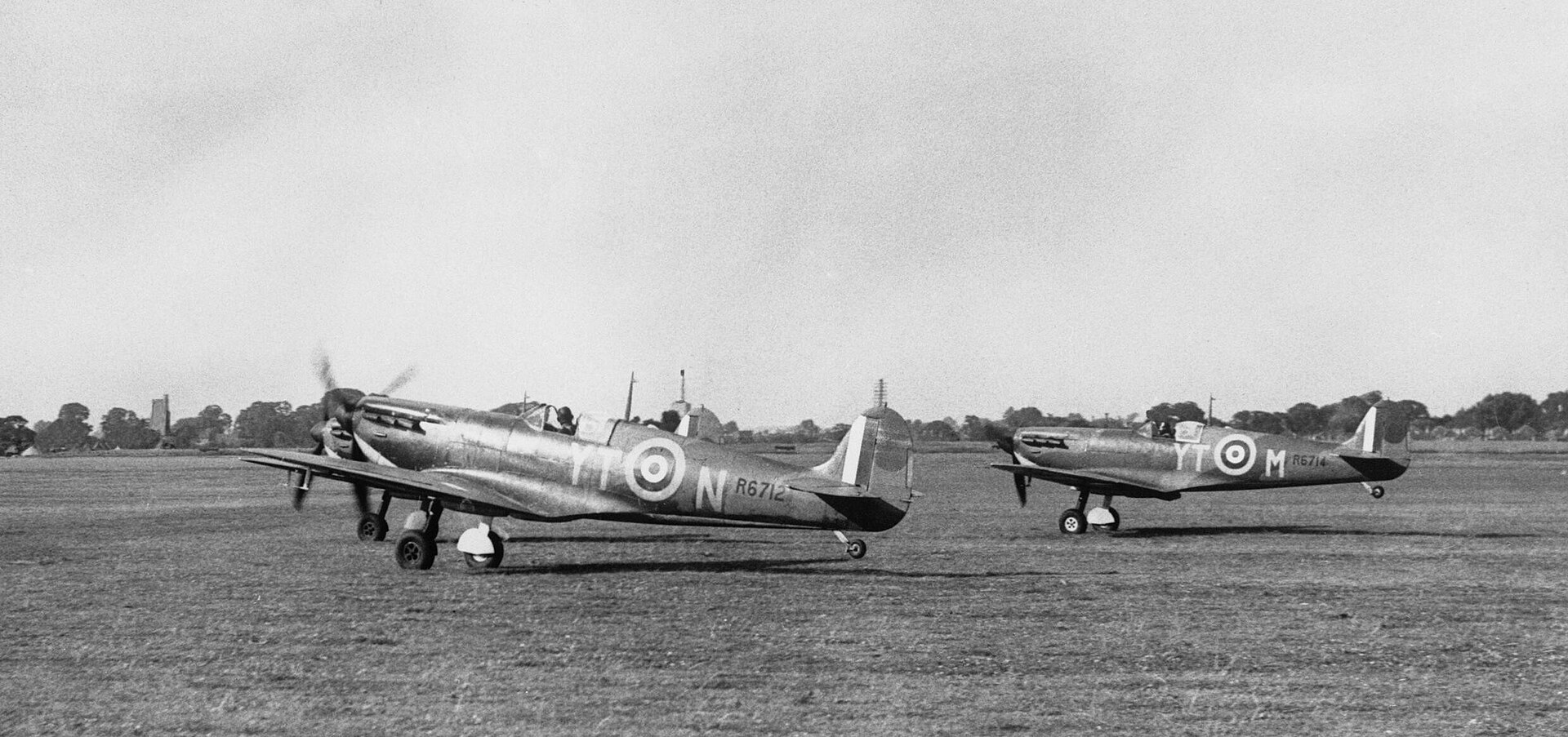
Part of Iguanaverse’s World War II archive.
On September 15, 1940, German bomber formations crossed southern England in two major waves. Royal Air Force fighter groups met them along routes toward London, producing running battles visible from the ground.
The day later became commemorated as Battle of Britain Day. Its importance rests not on a single decisive dogfight, but on what the interceptions communicated: Fighter Command remained capable of mounting organized resistance.
What the day revealed
German commanders needed air superiority if an invasion of Britain was to be credible. The strength of the RAF response on September 15 contradicted assumptions that British fighter defenses were nearly exhausted.
Claims made by both sides at the time exceeded actual losses, a common feature of fast-moving air combat. The operational conclusion mattered more: the Luftwaffe had not neutralized Fighter Command.
From battle to memory
The fighting did not end that evening. Raids continued and the campaign shifted increasingly toward nighttime bombing, helping usher in the Blitz.
September 15 became a national symbol because it offered a clear story inside a complex campaign—radar stations, controllers, ground crews, factories, pilots, observers, and civil defense working as one system.
Sources
- Royal Air Force Museum, 15 September 1940
- Royal Air Force, Battle of Britain anniversary
- Royal Air Force Museum, Battle of Britain phase three
Last reviewed September 15, 2026. Report a correction.