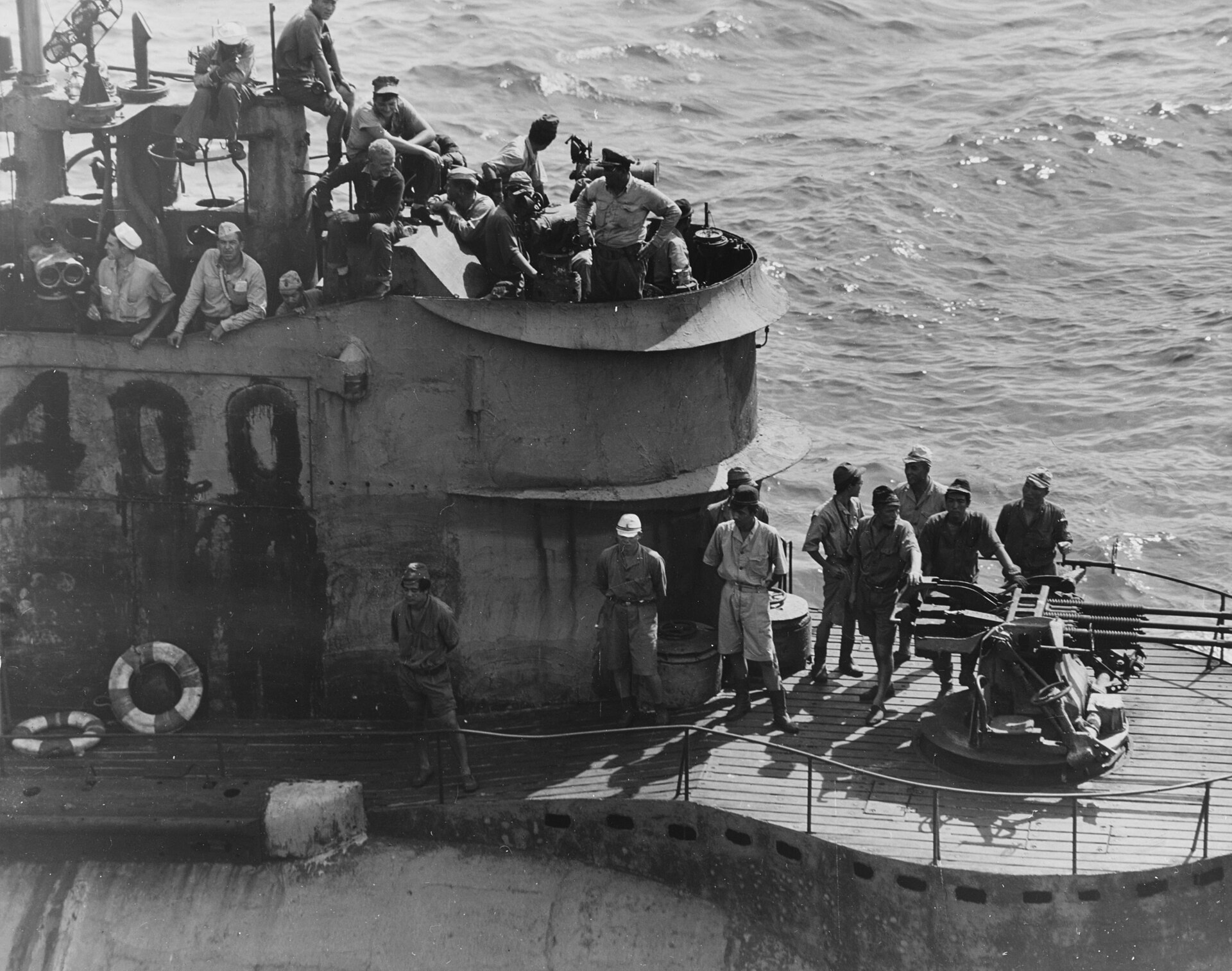
The submarine looked wrong. It was too large—about 122 meters from bow to stern—and a long cylindrical structure rose from its deck. That structure was not simply part of the conning tower. It was a hangar.
Inside, the Japanese Navy had designed space for three folding-wing Aichi M6A Seiran floatplanes. The aircraft could be rolled forward, unfolded, and launched by catapult. A vessel that approached its target underwater could surface, assemble an air strike, and disappear again.
A weapon built around distance
Admiral Isoroku Yamamoto backed the concept when Japan’s early wartime advances made attacks on distant targets seem possible. The boats were given exceptional range so they could cross oceans without refueling.
The original ambition was enormous. Planning shifted repeatedly as the war changed, moving from attacks on American cities toward targets such as the Panama Canal and the U.S. anchorage at Ulithi.
Three aircraft inside a submarine
The engineering demanded compromises. The hangar sat along the centerline, while the conning tower was offset. Aircraft wings and stabilizers folded to fit inside the narrow cylinder. Crews trained to surface, prepare the planes, and launch them quickly.
Yet the operational system arrived too late. Only three I-400-class submarines were completed before Japan surrendered, and none launched its planned combat strike.
A secret carried into the deep
After the war, the U.S. Navy examined the submarines. With the Soviet Union requesting access under Allied agreements, American forces eventually scuttled the captured boats near Hawaii in 1946. Their wrecks remained hidden for decades.
The I-400 did not change the outcome of the war. Its importance lies elsewhere: it showed how far engineers could push the boundary between two kinds of weapon. Decades later, missile submarines would fulfill the strategic idea in a very different form.
Sources
Last reviewed September 14, 2026. Report a correction.